
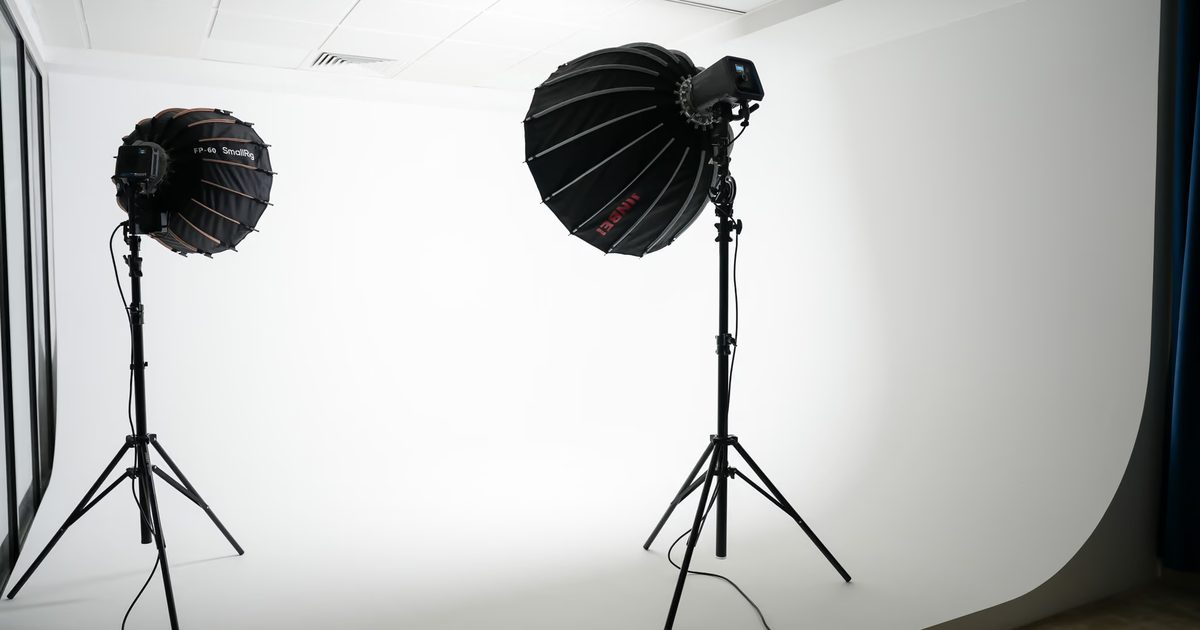
Forty products in an afternoon is a normal pace, not an ambitious one. It only works if one thing is true: nothing moves except the product.
- Budget 45 minutes to set up, then two to four minutes per product. Forty simple items fit in four hours.
- The cyclorama is QAR 300 an hour. Four hours less the 15% discount is QAR 1,020.
- Group by setup, never by product category. Every regroup costs a relight.
- Clean everything the day before. Dust and fingerprints are the single biggest retouching bill.
- Shoot a grey card on the first frame and the whole set colour-corrects in one batch.
Why product days are fast
On a portrait shoot, everything changes constantly — the person moves, the light has to follow, the frame gets recomposed. On a product day, the camera is on a tripod and stays there. The lights are set once. A person swaps the item, someone checks the frame, and the shutter goes.
The thing that breaks it is the background. On an ordinary wall, the line where the floor meets the wall sits in every frame and has to be cut out of every image afterwards. On a cyclorama wall there is no line, because the floor curves up into the wall with no corner. One flat tone, one click to select, forty images done in the time it takes to do four by hand.
That difference compounds: it is not just faster on the day, it removes a per-image cost from every image in the set. The full explanation is in what a cyclorama wall is.
What it costs
The cyclorama at Ottora Studio in Abu Hamour is QAR 300 an hour.
| Booking | Rate | Total |
|---|---|---|
| 3 hours | less 15% | QAR 765 |
| 4 hours | less 15% | QAR 1,020 |
| 6 hours | less 25% | QAR 1,350 |
Add your own camera and it stays at that. Add one of ours at QAR 300 an hour, or an operator at QAR 300 an hour, and the volume discount comes off the combined rate.
Four hours is the realistic booking for forty simple products. Six if they need styling between shots, or if you want multiple angles of each.
The running order that makes it work
Group by setup, not by category. This is the single biggest time saving and almost everyone gets it wrong.
Do the hardest item first. Glass, chrome, anything reflective. It will take three times as long as you think, and you want it done while everyone is fresh and there is still time to solve it.
Shoot a colour reference on the first frame. A grey card or a colour checker in one shot at the start means the whole set colour-corrects in one batch instead of one by one. This takes ten seconds and saves an evening.
Label as you go. A photograph of a handwritten SKU card between products costs three seconds and saves you an entire evening of guessing which image is which.
Leave the last twenty minutes for the ones you got wrong. You always get some wrong. Building the time in means you do not have to book again.
Preparation that happens before the studio
The shoot goes badly when the products arrive dusty. It is that simple.
- Clean everything the day before. Fingerprints, dust, lint. Every mark shows at full resolution and every mark costs retouching money — per image, on every image.
- Remove price stickers, or decide firmly that they stay in. Deciding halfway through means half your catalogue does not match the other half.
- Bring spares of anything fragile or anything that only exists in one colour.
- Bring the list, printed, in shooting order, with a tick box. It sounds unnecessary until item twenty-nine, when nobody can remember whether the navy one was done.
- Bring your own SSD and copy everything before you leave.
- Know your output dimensions. If the listing template is square, frame square. Cropping forty landscape images to square afterwards is an hour you did not need to spend.
Where people over-spend
On a photographer, for a straightforward catalogue. If the products are simple and the lighting is already set, a member of your own team with a decent camera can do this. Book the room, book an operator if nobody wants to be responsible for focus, and you have a catalogue.
On more angles than you will publish. Look at where the images are going first. If the listing template shows three images, shoot three. The fourth angle you shot "just in case" for forty products is two extra hours.
On retouching that the cyclorama already solved. Getting the background right in the room costs nothing extra. Fixing it afterwards is a line item per image, and forty of them adds up faster than the studio hire did.
On a second day, because the first was unplanned. By some distance the most expensive mistake here.
A realistic running order
For forty products, four hours, one person shooting and one person swapping:
| Time | What happens |
|---|---|
| 0:00–0:45 | Rig, set the light, shoot the grey card, test the hardest item |
| 0:45–1:45 | Everything that stands upright — about 20 items |
| 1:45–2:00 | Relight for flat lay |
| 2:00–2:50 | Everything flat — about 15 items |
| 2:50–3:05 | Relight for hanging items |
| 3:05–3:40 | Everything that hangs — about 5 items |
| 3:40–4:00 | Retakes, and copy files to your drive |
Frequently asked
How long does a product shoot take?
About forty-five minutes to set up, then two to four minutes per product. Forty simple products fit comfortably in four hours.
How much is a product photography studio in Doha?
The cyclorama is QAR 300 an hour at Ottora Studio in Abu Hamour, with 15% off from three hours and 25% from six. Four hours is QAR 1,020.
Do I need a photographer?
Not necessarily. The lighting is already set. If nobody on your team wants to be responsible for the camera, an operator is QAR 300 an hour.
Can I bring my own camera and lighting?
Bring your own camera by all means. The lighting is already rigged, so bringing your own generally costs you setup time rather than saving anything.
How do I get the images?
Copy them to your own SSD before you leave, or have them uploaded to Google Drive or WeTransfer.
Do you retouch the images?
Not as part of the room hire. The cyclorama removes most of the reason to — a clean background cuts out in one click rather than one image at a time.
How many products can I realistically bring?
More than you think. Setup is a fixed cost, so sixty simple items in six hours is comfortable and costs less per item than forty in four.
What are the opening hours?
Saturday to Thursday, 10:00 to 23:00. Closed Fridays.
Related reading:What a cyclorama wall is, and when you need one · Content creation studios in Qatar · What studio rental actually costs in Doha
The cyclorama is described on its own page, and live availability is on the booking calendar.