
The honest answer for most people is two, and a surprising number of shoots are better with one. Cameras are QAR 300 an hour each here, so this decision is worth five minutes of thought.
- One camera if the recording goes out roughly as filmed. Every cut will be visible, so plan not to cut.
- Two cameras for almost every interview and podcast. The second angle is what makes cuts invisible.
- Three or more only for panels, product demonstrations, or anything cut fast.
- Two is what can be guaranteed here, because two are owned in house. More are sourced, agreed and billed separately.
- Booking three cameras and no operator is the most expensive mistake on this page.
What each angle actually buys you
One camera
What you get: a single fixed frame for the whole recording.
What it costs you: every cut is visible. If you remove a stumble, the picture jumps, because the frame either side of the cut is identical. You can hide it with a cutaway, a graphic or a slow zoom in the edit, but you are hiding it, and viewers notice more than people assume.
When one is right:
- The recording will go out more or less unedited — a live-style episode, a full-length talk.
- It is a solo piece to camera and you will cut it into short clips anyway, where each clip is continuous.
- You are testing a format and do not want to spend money finding out whether you will keep going.
One camera is not a compromise for these. It is correct, and paying for a second angle you will not use is just a more expensive version of the same video.
If you are shooting on one, plan for it. Leave a beat of silence at the start and end of each answer so you can trim cleanly. Restart whole sentences rather than half of them. Both cost nothing and both save the edit.
Two cameras
What you get: a wide two-shot and a closer single. That is the standard interview and podcast setup, and it is the point where editing becomes genuinely easy.
What it buys: invisible cuts. Remove ninety seconds of waffle, cut to the other angle, and the audience never sees the join. Forty minutes of conversation becomes a clean fifteen without a single visible edit.
It also buys you reaction. A close angle on the person listening is often the most useful shot in an interview — it is where the laugh lands, or the flicker of doubt. You cannot get that shot from the camera pointed at whoever is speaking.
Cost: the second camera is QAR 300 an hour. A two-hour recording is QAR 600 for that angle. If it turns forty minutes into a usable fifteen, that is the cheapest editing you will ever buy.
Two is what can be guaranteed here, because two are owned in house. This is worth stating plainly: if a shoot needs more, they are sourced, agreed with you and billed separately — never assumed.
Three or more
What you get: a third angle, usually a wide of the whole room or a detail — hands, a product, a screen.
When it is worth it: panels of three or more people, where two cameras cannot cover everyone; product demonstrations where you need the item and the person at once; anything that will be cut fast.
When it is not: two people talking. A third angle on a two-person conversation mostly gives an editor more decisions and no more information, and the edit takes longer, not less. This is the single most common over-specification in podcast bookings.
The mistake that costs more than cameras
Booking three cameras and no operator.
With one locked-off camera, nobody needs to be behind it. With three, somebody has to be watching focus, checking that all three are still recording, and reframing between questions. If you are the person on camera, you cannot do any of that — you are talking.
The most common failure in a multi-camera self-shoot is discovering afterwards that camera two stopped recording twenty minutes in, or drifted out of focus when the guest leaned back. There is no fix for that in the edit. The angle simply does not exist for the second half of your episode.
An operator is QAR 300 an hour. On a three-camera shoot it is not an upsell, it is the thing that makes the other QAR 850 an hour worth spending.
Worked comparison
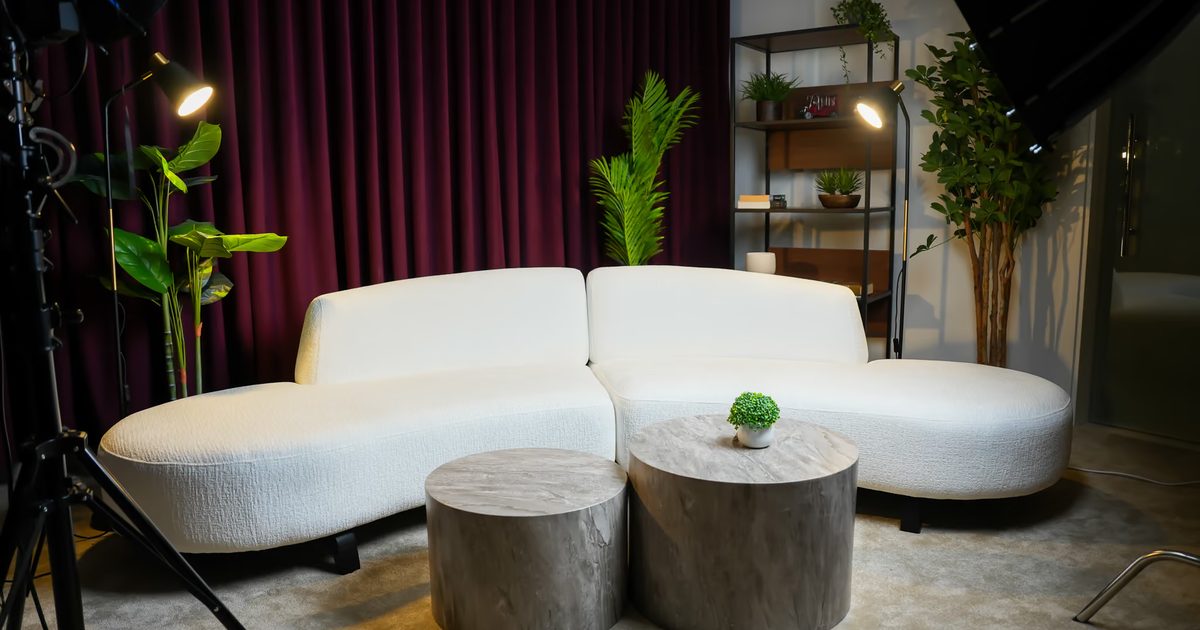
A two-hour interview in the Modern Sofa setup at QAR 250 an hour:
| Setup | Per hour | Two hours |
|---|---|---|
| Room only, your own camera | QAR 250 | QAR 500 |
| Room + 1 camera | QAR 550 | QAR 1,100 |
| Room + 1 camera + operator | QAR 850 | QAR 1,700 |
| Room + 2 cameras + operator | QAR 1,150 | QAR 2,300 |
Bookings of three hours or more take 15% off these rates, and six hours or more takes 25% — off the combined total, add-ons included. On a six-hour day that discount covers almost all of the operator.
Bring your own
Renting the room and using your own camera body is a completely normal booking, and a lot of people do it. The room price covers the space, the lighting and the microphones regardless of whose camera is pointed at you.
If you own one body and rent a second for the day, you have a two-camera setup for QAR 300 an hour — which is usually the cheapest route to a properly editable recording.
One caveat worth knowing: two different camera bodies produce two slightly different colour renditions, and matching them in the edit is a small tax you pay on every episode. It is manageable, and worth knowing about before you are surprised by it.
Frequently asked
How many cameras does a podcast need?
Two, for almost every two-person show. One if the episode goes out unedited. Three only for panels of three or more.
How many cameras does Ottora Studio have?
Two in house. That is the number that can be guaranteed for a single session. Additional cameras are arranged externally, agreed with you, and billed separately.
How much is a camera?
QAR 300 an hour, each, for the length of the booking. The volume discounts apply to it.
Do I need an operator?
Not for one locked-off camera. Yes for three, and usually yes for two if you are the one on camera.
Can I use my own camera?
Yes. Rent the room and the lighting and bring whatever body you own. It is a common booking.
Will two cameras double my editing time?
No — in practice it reduces it. Cutting between two angles is faster than disguising jump cuts on one.
What if a camera fails during the session?
With two cameras you still have a usable recording. This is an underrated argument for the second angle and the reason live-style shows book two even when they do not intend to cut.
Related reading:Podcast studios in Qatar: how to choose one · What studio rental actually costs in Doha · Podcast packages in Doha
Rates for every setup are on the studio rental page, and live slots are on the booking calendar.