
Between June and September, outdoor shoots in Doha fail for reasons that have very little to do with the light. The light is fine. It is everything else.
- Between about 09:00 and 16:00 from late May to late September, outdoor shooting in Doha is a fight you lose.
- Sweat shows on camera in about eight minutes. Cameras overheat. Lenses fog for ten to fifteen minutes coming out of a cold car.
- Two windows still work: the ninety minutes after sunrise, and the hour before sunset.
- Indoors, June is identical to January — same temperature, same light at 20:00 as at 10:00, no wind, no dust, no permit.
- Summer is the best time to bank content for autumn. It is also the quietest studio season, so slots are easy to get.
What actually goes wrong outdoors
People. Sweat shows on camera within about eight minutes, and no amount of powder holds past twenty. Hair goes. Makeup goes. Presenters squint into the sun and their eyes stay narrowed for the rest of the take, which reads as discomfort on screen no matter what they are saying.
The crew stops being creative. This is the real cost and nobody puts it in the budget. Two hours into a 45-degree afternoon, everyone is managing their own body temperature rather than thinking about the shot. The second half of the day produces noticeably worse work than the first, and you paid the same for both halves.
Equipment. Cameras overheat and stop recording, sometimes mid-take and often without an obvious warning. Batteries drain faster. Lenses fog the moment they come out of an air-conditioned car and take ten to fifteen minutes to clear — which is ten to fifteen minutes of your permit or your golden hour, gone.
Sand and wind. A shamal will put fine dust on a sensor in a single afternoon, and cleaning it is a bill. It will also put dust on every reflective surface in your product shots.
Sound. Wind noise, air conditioning condensers on every wall, and generators. Outdoor dialogue in Doha in summer often has to be re-recorded anyway, which means you paid for a location and got pictures.
The two windows that still work
If a shoot genuinely has to be outdoors:
The first ninety minutes after sunrise. Around 05:00 to 06:30 in June. Soft light, tolerable temperature, empty streets. The catch is that this requires a crew that will get up at four, and that everything is rigged before the light arrives — you do not get to set up during the good window.
The last hour before sunset, and the twenty minutes after it. Warmer light and dropping heat, but you get one attempt at it per day and, again, everything must be ready before it starts. Plan for one setup, not three.
Everything between 09:00 and 16:00 is a fight you will lose.
Practical rules if you must go outside
Six things that make an outdoor summer shoot survivable rather than merely attempted.
Rig in the shade, shoot in the sun. Every minute of setup that happens under cover is a minute the crew is not degrading.
Bring twice the batteries and half the schedule. Heat halves battery life and doubles how long everything takes. Both, at once.
Let lenses acclimatise before the window, not during it. Take the camera out of the cold car and leave it in the shade for fifteen minutes while you set up. Fogging during golden hour costs you the entire day.
Wardrobe in breathable fabrics, and a duplicate of every shirt. Sweat patches end takes.
Record clean dialogue separately, or plan to re-record it. Assume the outdoor audio is a guide track. If that is unacceptable, you are shooting indoors.
Have a real indoor fallback booked. Not "we'll figure it out". A shamal is not a rare event in summer, and a booked room costs less than a lost crew day.
The indoor alternative
Inside a studio, June is the same as January.
The temperature does not move, so nobody is managing their own comfort instead of the work. The light does not change at four o'clock, so a shot taken at the end of the day cuts against one taken at the start. There is no wind, no dust, no traffic noise and no permit.
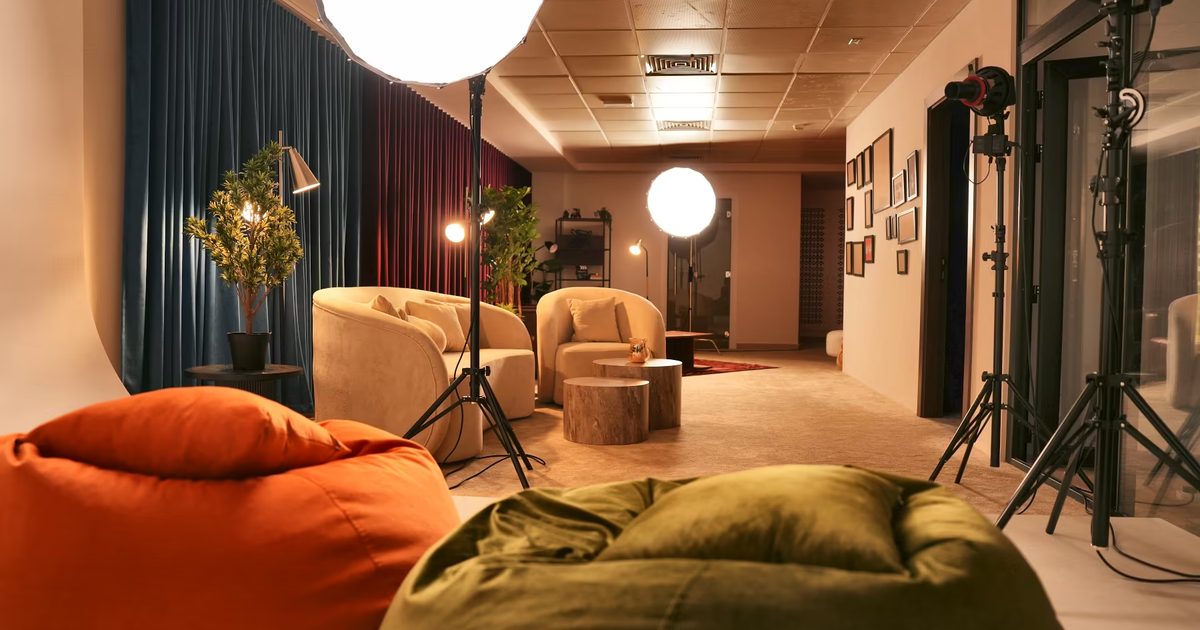
At Ottora Studio in Abu Hamour, setups run QAR 200 to QAR 400 an hour and the studio is open until 23:00 — which matters in summer, because a 20:00 call time is far easier to staff than a 05:00 one.
The full floor is four different looks in one room. A production that would have needed three outdoor locations and three drives between them becomes one booking and a fifteen-metre walk. Six hours takes 25% off the rate, which is where most full-day shoots land.
| Summer shoot | Outdoors | In studio |
|---|---|---|
| Usable hours per day | About 2.5, in two blocks | 13 |
| Weather risk | Shamal, haze, heat | None |
| Permit needed | Often | No |
| Locations per day | 1, maybe 2 with a drive | 4 in one building |
| Light continuity across the day | Changes constantly | Identical at 10:00 and 22:00 |
| Audio usable as recorded | Rarely | Yes |
Summer is the best time to make content, not the worst
This is the counter-intuitive part, and it is the thing most Doha marketing teams get backwards.
Everyone assumes July and August are dead months and pauses production. In practice the heat forces everything indoors anyway, the studio calendar is at its quietest, and nobody you are competing with is making anything. That combination makes it the cheapest and easiest time of year to bank a large amount of material.
The wider version of this argument — how the Qatari calendar should shape a content plan, including Ramadan and the September rush — is in content marketing in Qatar.
If your brief needs to look like Doha
Sometimes the brief genuinely requires the city, and no studio replaces that. Three approaches that work in summer:
Shoot the interiors indoors and the exteriors in two evening pickups. Most scripts need far less outdoor footage than the storyboard suggests. Cut the exterior requirement down to the shots that carry meaning and shoot those in one golden hour.
Shoot on a cyclorama and replace the background. A clean, evenly lit wall keys reliably, and it means the location decision can be made in the edit rather than on a rooftop in August.
Move the shoot to October. Not an option for everyone, but if the campaign date is flexible this is the cheapest fix available and nobody ever regrets it.
Frequently asked
When is it too hot to film outdoors in Doha?
Practically, from late May to late September, between about 09:00 and 16:00. Early morning and the hour before sunset remain workable throughout.
Where can I film indoors in Doha?
Ottora Studio in Abu Hamour has six setups from QAR 200 to QAR 400 an hour, all air conditioned and lit, open Saturday to Thursday 10:00 to 23:00.
Is the studio air conditioned?
Yes, and the temperature is the same year round. There are no windows in the shooting areas, so the light does not change through the day either.
How late can I book?
Until 23:00, Saturday to Thursday. Fridays are closed. Evening slots book out fastest in summer.
Can I shoot a whole campaign in one day indoors?
Usually. The full studio floor holds four distinct setups, so a day that would have been three locations becomes one booking. Six hours or more takes 25% off the hourly rate.
Do cameras really overheat in Doha in summer?
Yes, routinely, and mirrorless bodies recording 4K are the most affected. Shade the camera between takes and carry a spare body if the day cannot be repeated.
Do you help with the concept, or just the space?
Both are available. Hourly rental is the space. Content creation is the done-for-you version — research and planning first, then the shoot and edit.
Related reading:Content marketing in Qatar: what actually works · Content creation studios in Qatar · What studio rental actually costs in Doha
Availability is on the booking calendar.